What is comprehensive car insurance?
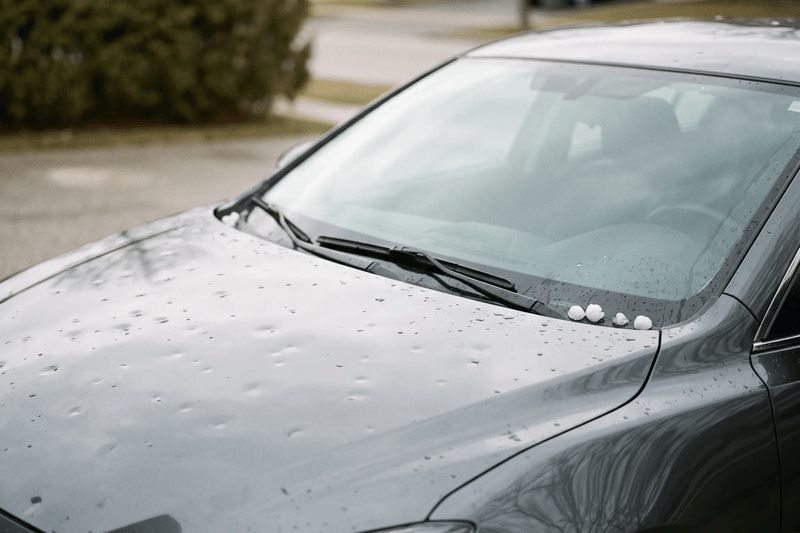
Comprehensive coverage pays to repair or replace your car when something other than a crash damages it — fire, theft, hail, a falling branch. It is optional in Ontario, and one of four ways to cover your own car.
 Eldho George, RIBOEldho George, RIBOHead of PolicyScanner, Licensed Insurance BrokerEldho George is a licensed insurance broker and the head of PolicyScanner. He writes PolicyScanner’s guides to help Ontario drivers understand what their auto insurance covers, what it costs, and what to ask before they buy.
Key takeaways
- Comprehensive coverage pays for damage to your car that did not come from a crash.
- It is optional in Ontario. A lender or leasing company can still insist on it.
- Hitting an animal comes under comprehensive coverage. Swerving to miss one and hitting a tree comes under collision.
- A stolen car pays out what it was worth that day, not what you paid for it.
Comprehensive car insurance is the optional coverage that pays to repair or replace your own car when something other than a crash damages it, such as fire, theft, hail, a falling branch, or someone keying the door. It isn’t mandatory in Ontario, but it is one of four ways you can cover damage to your own vehicle.
The name is the problem. “Comprehensive” sounds like everything, and it isn’t — it’s specifically the damage that happens when you are not crashing into something. Hit another car and that is a different coverage entirely.
This guide covers what it pays for, what it won’t, how the deductible works, and whether it’s still worth carrying on an older car.
What does comprehensive insurance cover?

Start from the other end. Your policy doesn’t define comprehensive coverage by listing what’s in it — it covers everything that is not a crash, plus a few named extras.
So the question to ask after something happens isn’t “is this on the list?” It’s “did I hit something, or did something happen to my car?”
Things that happen to your car:
- Fire
- Theft, or an attempted theft that leaves damage behind
- Lightning, windstorm, hail, or rising water — flooding included
- Earthquake and explosion
- Damage during a riot
- Falling or flying objects — a branch, a rock off a truck, ice off an overpass
- Vandalism

Hitting an animal counts. This is the one that catches people. You were driving, you struck something, and it feels like a collision — but the policy treats an animal strike as something that happened to you. A deer is a comprehensive claim.
Swerving to miss the deer and hitting a guardrail is not. Same animal, same night, but a different coverage and usually a different deductible.
Theft has one exception worth knowing. If the person who takes the car lives in your household, comprehensive coverage won’t pay. Same if an employee whose job involves driving or servicing it takes it. All perils coverage does pay in those cases, and it’s the main reason to buy it.
Water is the other one people get wrong. Rising water is covered. Driving into standing water is different. Some insurers treat that as a choice you made rather than something that happened to you, so ask yours where the line falls.
Comprehensive sounds like everything. It is everything that is not a crash.
What comprehensive insurance does not cover

Three things, and they’re the ones people assume are in there.
Wear and tear. Rust, corrosion, and parts that simply reach the end of their life. Insurance covers damage, not age.
Mechanical breakdown. If the transmission goes, that’s yours. Comprehensive coverage pays when something damages your car, not when your car stops working.
Tires. On their own, tire damage isn’t covered.
There is one exception. If a mechanical fault starts a fire, the fire damage is covered — it is only the failed part that isn’t. So an engine fire that guts the car is a claim. The engine that caused it isn’t.
Is comprehensive mandatory in Ontario?
No. Ontario requires four coverages, and this isn’t one of them. The section of your policy that holds it is headed “optional”, and the policy means it.
What’s mandatory here is third party liability, accident benefits, coverage for an uninsured motorist, and Direct Compensation — Property Damage, usually shortened to DCPD. Those four come on every Ontario policy whether you want them or not.
A lender can still require it. If your car is financed or leased, the company that owns the paper on it will almost certainly insist you carry comprehensive and collision until it’s paid off. That’s a contract with them, not a rule from the province, but it’s not negotiable either.
Comprehensive or collision — which one pays?
The short version: comprehensive coverage pays for what happened to your car. Collision coverage pays for what you hit.
| What happened | Which one |
|---|---|
| A tree fell on it | Comprehensive |
| You backed into a post | Collision |
| It was stolen | Comprehensive |
| You hit a deer | Comprehensive |
| You swerved to miss the deer and hit a fence | Collision |
| Hail dented the roof | Comprehensive |
| Someone hit you and drove off | Comprehensive |
They’re bought separately, and each has its own deductible. Plenty of drivers carry both — and Ontario also sells them together as all perils coverage, with a cheaper version called specified perils.
Which of the four you want is worth one conversation before renewal.
How the comprehensive deductible works
The deductible is the part you pay. Your insurer covers the rest.
It applies to each claim, and separately to each car on the policy. Two hailstorms in one summer means two deductibles.

Hail, $4,000: you pay $500, your insurer pays $3,500. Stolen car, $18,000: you pay $500, your insurer pays $17,500. Windshield, $600: you pay $500, your insurer pays $100.
One thing the picture hides: if the car is damaged beyond repair, the payout is not what you paid for it. Your insurer pays its actual cash value — what the car was worth the day it was lost — minus the deductible. A five-year-old car that cost $30,000 new might settle at $12,000, and that is the single most common surprise at claim time.
The windshield is the one to think about. Your policy uses a broken windshield as its own worked example, and the point it makes is blunt: a claim below your deductible is entirely yours. Claiming $100 isn’t worth the phone call.
Glass is the exception, and it changes which deductible you should pick.
Do you need comprehensive?

One question decides it. If your car were stolen tonight, could you replace it without the money hurting?
If you couldn’t, keep comprehensive coverage. That is the job it does.
If you could, it becomes a maths question. Take what the car is worth today, subtract your deductible, and that is the most this coverage will ever pay you. A $3,000 car with a $1,000 deductible is $2,000 of protection, bought a month at a time. Somewhere below that, the premium costs more than the cover is worth.
Two things override the arithmetic:
- A financed or leased car. The lender decides, not you.
- Where the car sleeps. Parked on the street in a city, theft and vandalism are ordinary events. In a garage in a small town they mostly aren’t.
You may not be able to add it back. Insurers can decline comprehensive coverage on an older car or one that already has damage, so what you drop at 40,000 km might not be on offer at 200,000.
How much does comprehensive cost in Ontario?
It varies by insurer, and no insurer publishes a price for this coverage on its own.
What is published is the whole premium. The average Ontario driver paid $2,164 a year as of October 2025, according to the province’s regulator. In the Greater Toronto Area it was $2,810, and in rural Ontario $1,740.
Comprehensive coverage is only a part of that, and how big a part depends on what your car is worth, where it sleeps, and the deductible you pick. A higher deductible lowers it. The only way to know your own number is to price the policy with the coverage and without it.
Is a $500 or $1,000 deductible better?
It is the most common question about this coverage, and it has an answer.
The gap between the two is usually modest — tens of dollars a year on most policies, not hundreds. Ask for both numbers when you quote. The difference is what you are actually buying.
So it comes down to one thing. If your car were damaged tomorrow, would finding $1,000 be a problem? If it would, take the $500. The extra premium is what it is: a little every year so a bad month stays survivable.
If it wouldn’t, take the $1,000 and keep the difference. Over five claim-free years that adds up to more than the gap ever costs you.
The one place this changes is glass. Windshield claims are the most common of all, and many policies carry a lower deductible for them or sell it as a separate endorsement. Ask what yours does before you decide, because a $1,000 deductible that doesn’t apply to glass is a different proposition.
Adding it to your policy
You can add comprehensive coverage when you buy, at renewal, or partway through a term. It goes on the certificate your insurer sends you, which is the document listing what you actually bought. If comprehensive coverage is on it, you have it. If it isn’t, you don’t, whatever you remember agreeing to.
If you are not sure what is on yours, a broker can read the certificate back to you.
Compare quotes from 15+ insurers.
With a licensed Ontario broker on your side, at no extra cost.
Sources
- OAP 1 — Ontario Automobile Policy, s. 7.1.2 (Specified Perils, Comprehensive), s. 7.2.1 (what is not covered), s. 7.3 (the deductible) (opens in new tab)
- FSRA — Optional and extra coverage, the perils list (opens in new tab)
- FSRA — average Ontario auto insurance premium, October 2025 (opens in new tab)
Related guides
About the author
Eldho George, RIBO
Eldho George is a licensed insurance broker and the head of PolicyScanner. He writes PolicyScanner’s guides to help Ontario drivers understand what their auto insurance covers, what it costs, and what to ask before they buy.
View profile and RIBO registration →