Comprehensive vs collision: which one pays?
Collision pays when your car hits something. Comprehensive pays when something happens to it that isn’t a crash. And when another driver hits you, neither one pays.
 Eldho George, RIBOEldho George, RIBOHead of PolicyScanner, Licensed Insurance BrokerEldho George is a licensed insurance broker and the head of PolicyScanner. He writes PolicyScanner’s guides to help Ontario drivers understand what their auto insurance covers, what it costs, and what to ask before they buy.
Key takeaways
- Collision pays when your car hits something. Comprehensive pays when something happens to your car that isn’t a crash.
- If another insured driver hits you, neither one pays. Your own insurer pays under direct compensation.
- A hit-and-run where the car is never identified is a collision claim. If you got the plate, it’s direct compensation.
- Financed or leased, the lender will require both.
Comprehensive and collision are the two types of optional coverage on your auto policy that pay to repair or replace your own car. The difference is what caused the damage. Collision pays when your car hits something or rolls over. Comprehensive pays when something happens to your car that isn’t a crash — fire, theft, hail, vandalism, a branch coming down on it.
When you have a claim it isn’t always obvious which coverage it comes under. In Ontario there is a third answer as well. When another insured driver hits you neither of them pays. Your insurer still pays, but under a different part of your policy called direct compensation, which every policy has.
This guide shows which coverage pays for the events people claim on. It also shows what happens to your deductible when two coverages share one accident, and whether you can carry comprehensive without collision.
What does each one cover?
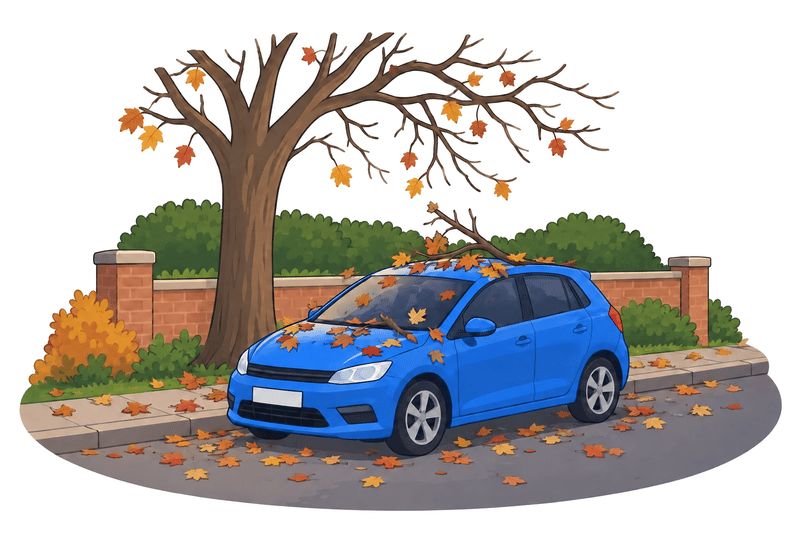
Collision coverage pays when your car hits something, and comprehensive coverage pays for nearly everything else that can happen to it.
The first one is called collision or upset coverage. It pays when your car collides with another object or tips over, and object means almost anything: another vehicle, the ground, and anything in or on the ground. So a curb, a pole, a garage door and the ditch beside the road all count, and so does a rollover that never touches anything but the road.
Comprehensive is the badly named one. It sounds like it covers everything, and it doesn’t cover a crash at all. What it covers is what can happen to a car, parked or moving, without it hitting anything: fire, theft, lightning, windstorm, hail, rising water, earthquake, explosion, riot, falling or flying objects, and vandalism.
If you are not sure which one applies, ask whether your car hit something. If it did, the claim is collision. If something happened to the car instead, it is comprehensive.
Is it a comprehensive or a collision claim?
Comprehensive and collision split the events people claim for like this.
| What happened | Collision | Comprehensive |
|---|---|---|
| Another insured driver hit youNeither — direct compensation | — | — |
| You hit a pole, a curb, a garage door | Pays | — |
| You skidded into a ditch | Pays | — |
| The car rolled over and hit nothing | Pays | — |
| A pothole wrecked the suspension | Pays | — |
| Someone hit you and drove off, but you got the plateNeither — direct compensation | — | — |
| Someone hit you and drove off, car never identified | Pays | — |
| A tree came down on it while parked | — | Pays |
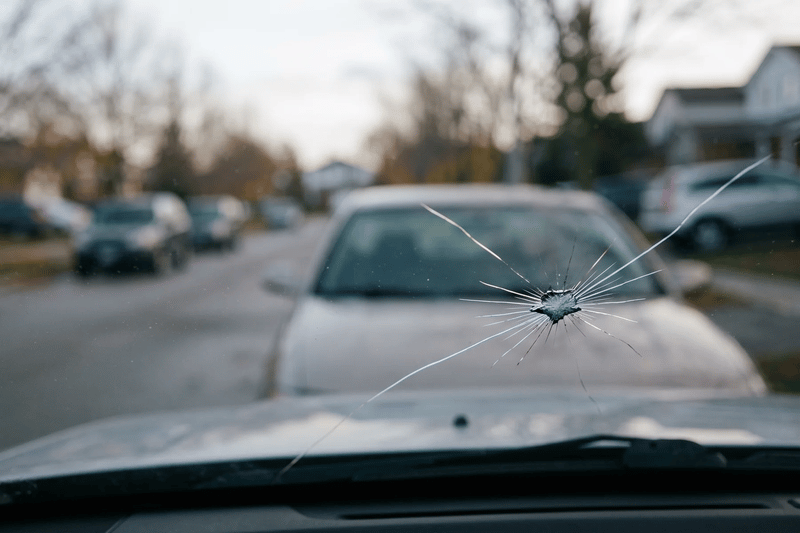
| A rock off a truck cracked the windshield | — | Pays |
| Hail dented the roof | — | Pays |
| It was stolen, set on fire, or keyed | — | Pays |
| Flood water reached it | — | Pays |
| You hit a deer | — | Pays |
| You swerved to miss the deer and hit a guardrail | Pays | — |
| Someone in your household took itNeither — all perils only | — | — |
| A tire blew out in normal drivingNeither — not covered | — | — |
Three of those rows are the ones people argue about.
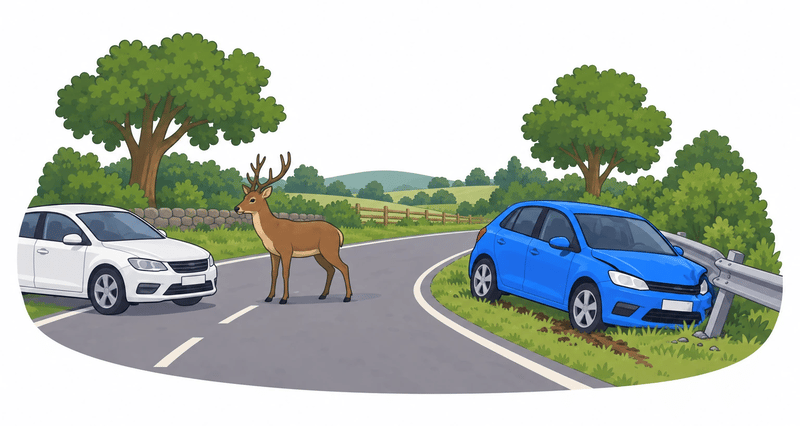
The deer, and the swerve. Hitting the animal is a comprehensive claim because the policy treats a living animal as something that happened to your car rather than as an object you struck. Swerving to avoid it and hitting the guardrail is a collision claim because now your car has hit an object. The two coverages often have different deductibles: with a $500 comprehensive deductible and a $1,000 collision deductible, the swerve costs you $500 more than the deer would have.
Theft by someone in your house. Comprehensive does not pay if the car was taken by a person who lives with you or by an employee whose job involves driving or servicing it. The only coverage that does pay in that case is all perils coverage, which is comprehensive and collision sold together as one, plus this one kind of theft.
A tire that blows out. A tire that fails in normal driving is not covered by either one because the policy excludes damage to a tire by itself. A tire destroyed in a crash is covered because the loss came from the collision.
When another driver hits you, whose insurance pays?
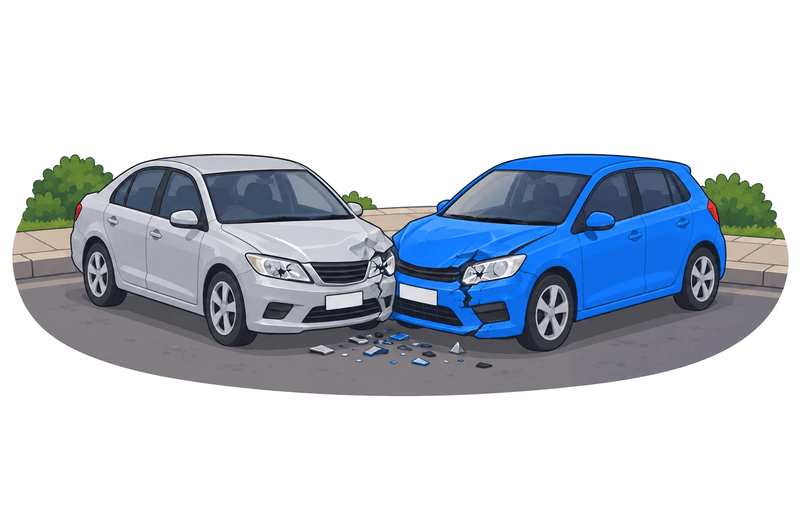
In Ontario when another insured driver damages your car, your own insurer pays for the repair. Not theirs. This is called direct compensation property damage, or DCPD, and it is on every auto policy. Your insurer doesn’t collect the money back from the other driver’s company: each insurer pays its own customer, and the cost of being at fault lands on the other driver through their premium.
Direct compensation has one condition that matters here. The law requires that at least one other vehicle in the accident is insured in Ontario. If the driver who hit you leaves and is never identified, there is no other insured vehicle so direct compensation cannot apply. That is why the table above lists an unidentified hit-and-run under collision.
In that case the claim goes to your collision coverage and your collision deductible applies. With a $1,000 deductible that is $1,000 towards a repair you did not cause.
If you got the plate and the car turns out to be insured in Ontario, the driver fleeing changes nothing and direct compensation still applies. And the hit-and-run coverage every policy already has, called uninsured automobile coverage, pays for your injuries in a hit-and-run but not for your car. The policy says so in as many words.
A hit-and-run is the main reason to carry collision coverage even if you never expect to be at fault.
What happens to your deductible when both coverages apply?
Your deductible is the part of a claim you pay yourself, and comprehensive and collision each have their own, usually set at different amounts, a lower one on comprehensive because a cracked windshield is a smaller claim than a crash. It applies to every claim and separately to each car on the policy, so two hailstorms in one summer means paying it twice.
Some accidents are split between direct compensation and collision. That happens when another driver hit you but some of the fault is yours: direct compensation pays the share of the damage that was the other driver’s fault, and collision pays the share that was yours.
You do not pay both deductibles in full. Each one is cut in the same proportion as the share that coverage pays. The policy shows it with its own example, and note that direct compensation carries a deductible of its own on many policies.
- The car was worth $12,000
- You are 25% at fault
- $300 direct compensation deductible
- $500 collision deductible
| Direct compensation pays75% of $12,000, less 75% of the $300 | $8,775 |
|---|---|
| Collision pays25% of $12,000, less 25% of the $500 | $2,875 |
| You paynot the $800 two full deductibles would come to | $350 |
| Adds up to the car’s value | $12,000 |
One more rule about deductibles: if the loss was caused by fire or lightning, there is no deductible at all.
Can you have comprehensive without collision?
Yes. They are separate options and you can hold either one on its own. Most people have both. That is what a broker means by full coverage: these two on top of the ones Ontario makes you carry. It is not a product, and no Ontario policy is called that.
If you are going to drop one, drop collision coverage first. It can never pay more than the car is worth, less your deductible, so on a car worth $4,000 with a $1,000 deductible it tops out at $3,000 and the premium keeps coming regardless. Comprehensive coverage is cheaper and it covers the things you cannot drive carefully around: theft, hail, a tree, a deer. That is why comprehensive without collision is the common choice on an older car, and collision without comprehensive is rare, though nothing prevents it.
There is one rule that can take the choice away. A driver can choose to opt out of direct compensation to save on premium, which means you have no cover for your car when another driver hits you, and if you have, your insurer is not allowed to sell you collision coverage either. Few drivers do, but if you have, collision is not available to you.
There is also a way to buy both as one. All perils coverage combines comprehensive and collision in one coverage and adds the household theft that comprehensive on its own excludes.
Do you need comprehensive and collision if your car is financed or leased?
Yes, and it isn’t your decision. The lender or leasing company will almost always require both comprehensive and collision until the car is paid off, because the car is what they get back if you stop paying and they want it repairable.
That requirement comes from your finance agreement, not from the province, and it is not negotiable. What is still yours to decide is the deductible on each, and the usual rule is to pick the largest amount you could pay tomorrow without borrowing, because that is what buys the lower premium. Choosing a car insurance deductible works through the numbers.
Compare quotes from 15+ insurers.
With a licensed Ontario broker on your side, at no extra cost.
Sources
- Ontario Automobile Policy (OAP 1) §7.1.2 (the four coverages), §7.2 (what is not covered), §7.3 (the deductible), §5.2.3 (unidentified automobile), §6.1 (direct compensation) (opens in new tab)
- Insurance Act, R.S.O. 1990, c. I.8, s. 263 — direct compensation, including s. 263(5)(b) on subrogation and s. 263(2.3)(b) on electing out (opens in new tab)
- FSRA — Optional coverage (opens in new tab)
Related guides
About the author
Eldho George, RIBO
Eldho George is a licensed insurance broker and the head of PolicyScanner. He writes PolicyScanner’s guides to help Ontario drivers understand what their auto insurance covers, what it costs, and what to ask before they buy.
View profile and RIBO registration →